
The ALRC’s recommendations from June 2026 delivered a major review of the Future Acts regime under the Native Title Act 1993 (Cth) (‘NTA’), aimed at creating a fairer native title framework. While the recommendations are not yet law, they signal the direction of potential future reform and raise important considerations in project planning, land access, stakeholder engagement and approvals for mining and energy companies.
What are the new proposed reforms about?
The recommendations seek to streamline Future Act regime processes, reduce regulatory costs, improve economic development opportunities, strengthen compliance with Australia's international obligations, and enhance confidence in decision-making outcomes. They are not simply about faster approvals and could affect how Future Acts are assessed, negotiated and enforced.
Are the reforms already law?
No. The recommendations do not change the current operation of the NTA and would require government adoption and legislative amendment before taking effect. Existing Future Act and Right to Negotiate processes therefore continue to apply, although the report may influence stakeholder expectations and future policy development.
Why was the Future Acts Regime being reviewed?
The review was prompted by concerns that the regime is complex, costly and difficult to navigate, particularly following the Juukan Gorge inquiry. The ALRC identified issues including under-resourced native title bodies, lengthy negotiations, procedural complexity and reduced public confidence, all of which can contribute to delays and increased costs for project proponents.
What are the most significant changes to the Future Acts Regime?
The reforms aim to promote more transparent, balanced and effective Future Acts agreements for proponents.
Impact-Based Framework
The ALRC recommends replacing the current tenure-based approach with an impact-based framework. Thie means procedural rights would be determined by the likely nature and extent of any infringement to native title rights and interests.
Projects likely to significantly affect native title rights and cultural heritage could trigger more extensive consultation requirements and greater negotiation obligations.
Right to Negotiate Process
The recommendations seek to strengthen native title participation in negotiations through improved early determination processes, separate issue referrals and good faith negotiation obligations. A key proposal is increasing the minimum negotiation period before arbitration from six months to twelve months, potentially requiring longer project lead times.
Support for Prescribed Bodies Corporate (PBCs)
PBCs would be given greater opportunities to streamline decision-making, including the ability to rely on standing instructions from native title holders in certain circumstances, with safeguards. The reforms also introduce stronger transparency measures for Indigenous Land Use Agreements, such as better information on related records and registers.
Introduction of Native Title Plans
Native Title Plans would allow native title holders to identify cultural, environmental, social and economic priorities before projects are proposed. For example, PBCs can set out their preferred processes and conditions for future acts, or identify a ‘catalogue’ of services they can provide. This could assist proponents with early planning and engagement, while also highlighting areas likely to require additional consultation or protection measures.
Role of the National Native Title Tribunal
The National Native Title Tribunal would have an expanded role in mediation, conciliation and consent-based private arbitration to encourage earlier agreement-making. The reforms to arbitration processes involve renewed decision-making criteria and capacity to make financial conditions.
Our View and Next Steps
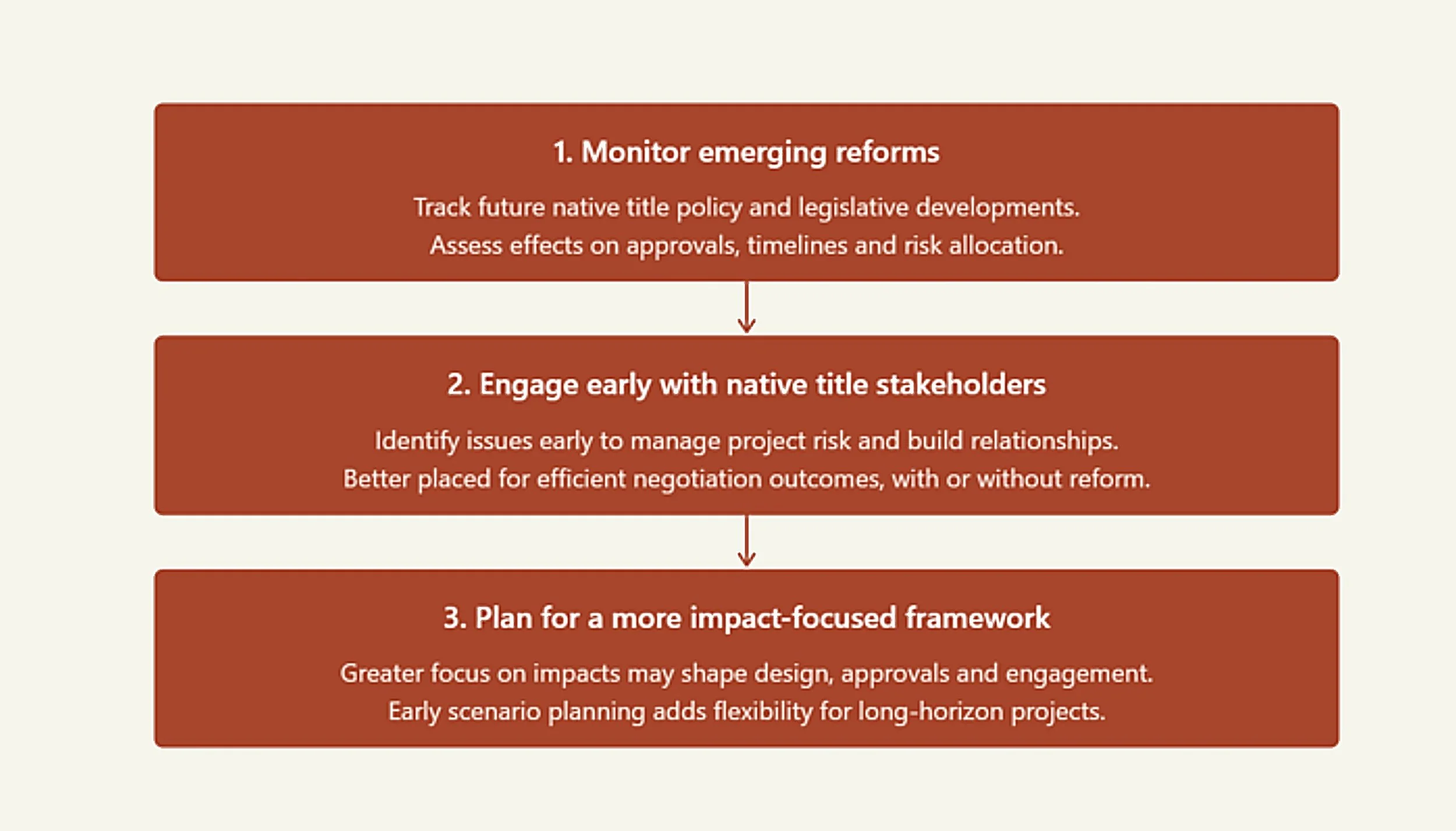
While the ALRC's recommendations are not yet law, they point toward a future framework that places greater emphasis on the practical impacts of projects on native title rights and interests.
Mining and energy companies need to undertake earlier stakeholder engagement, develop impact assessment processes, and incorporate native title considerations into project planning from the outset. Although this may increase upfront planning requirements, it could also reduce the risk of disputes, delays and project redesign later in the project lifecycle.
If would you like to discuss your project’s native title and land access strategy with us, we’d love to help.
Contact the Team at Mining + Heritage Legal to discuss your next step.
References
Fulfilling the Promise of Mabo: Reforming the Future Acts Regime in the Native Title Act 1993 (Cth), https://www.alrc.gov.au/fulfilling-the-promise-of-mabo/
Native Title Act 1993 (Cth) (‘NTA’), https://www.austlii.edu.au/cgi-bin/viewdb/au/legis/cth/consol_act/nta1993147/
National Native Title Council: Future acts regime reform, https://nntc.com.au/our-work/future-acts-regime-reform/